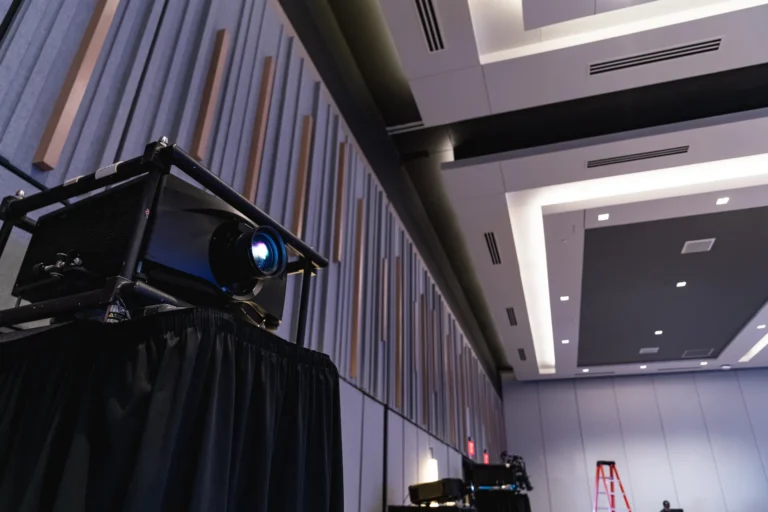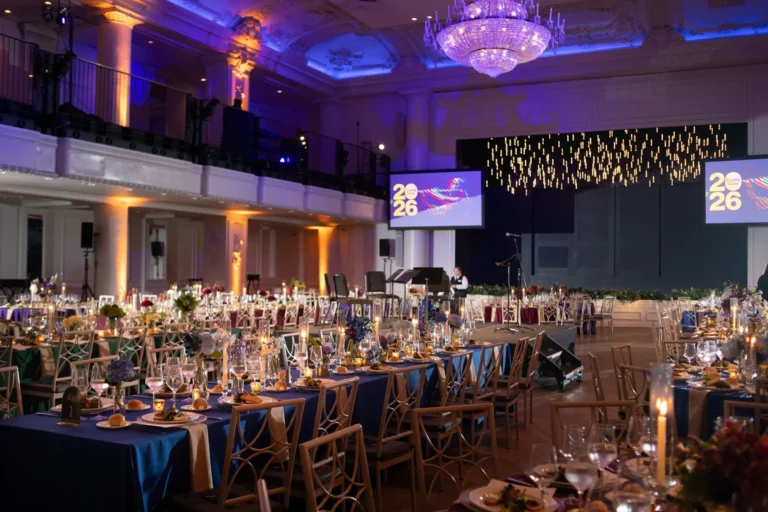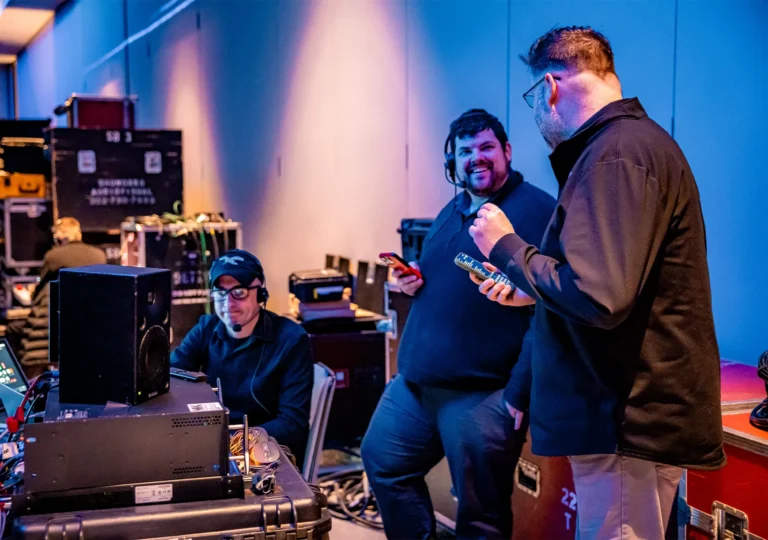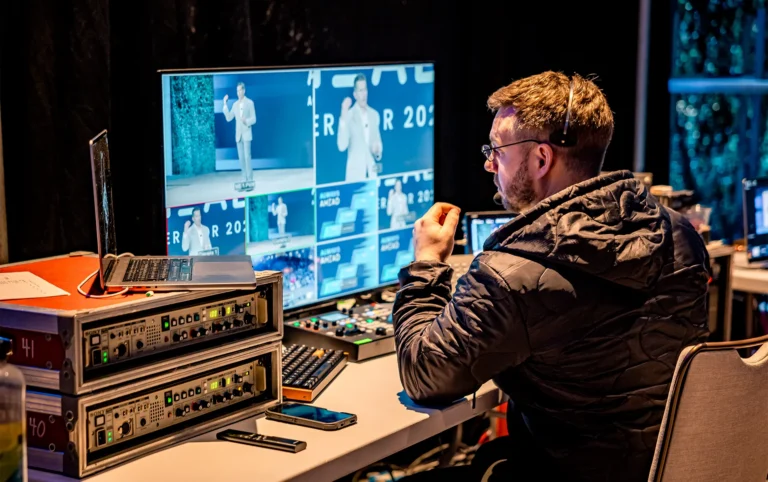

A production plan can tell you a lot. It shows you where presenters need to be, when transitions happen, and how everything is supposed to move from one moment to the next.
Rehearsal tells you whether it all actually works.
A corporate meeting or conference may be carefully planned down to the minute, but there are some things you only learn once the presenters are on stage, the technology is running, and you get to see how it all comes together.
That’s what rehearsal is for.
From a Plan to a Show
For an AV production team, rehearsal is a chance to see the show as a whole instead of a series of separate moments.
Transitions can be timed with everyone in place. Microphones can be checked with presenters in position. Lighting can be adjusted for cameras and specific moments on stage. Presenters can get comfortable with the stage, confidence monitors, microphones, and the flow of their part of the show.
And once you run it all together, you start to see things differently. You notice if a transition needs to be tightened. You can see that the lighting looks different on camera than expected or the blocking for a presenter doesn’t align with their preference.
These details can make or break the experience and are exactly why you rehearse.
Everyone Gets a Better Read on the Show
The show looks different depending on where you’re standing.
The presenter is focused on their message. The production team is thinking about the tech, timing, and transitions. And the planner has been keeping track of all the pieces that got everyone to this point and making sure that they are coming together as expected.
Rehearsal is one of the first times all of those different perspectives come together in the same room.
For presenters, knowing what to expect can replace some of the nerves with confidence. It gives the production team a better sense of the show’s pace and the people they’ll be working with. And the planner finally gets to watch something they’ve spent weeks or months building take shape in the room.
That run-through gives everyone a better sense of what needs to happen once the room is full.
The Small Adjustments Add Up
Not every rehearsal ends with a major change. Most shouldn’t.
More often, rehearsal is about making small adjustments as you go. You might work through a question with a presenter, or rethink a moment once you see how it plays in the room.
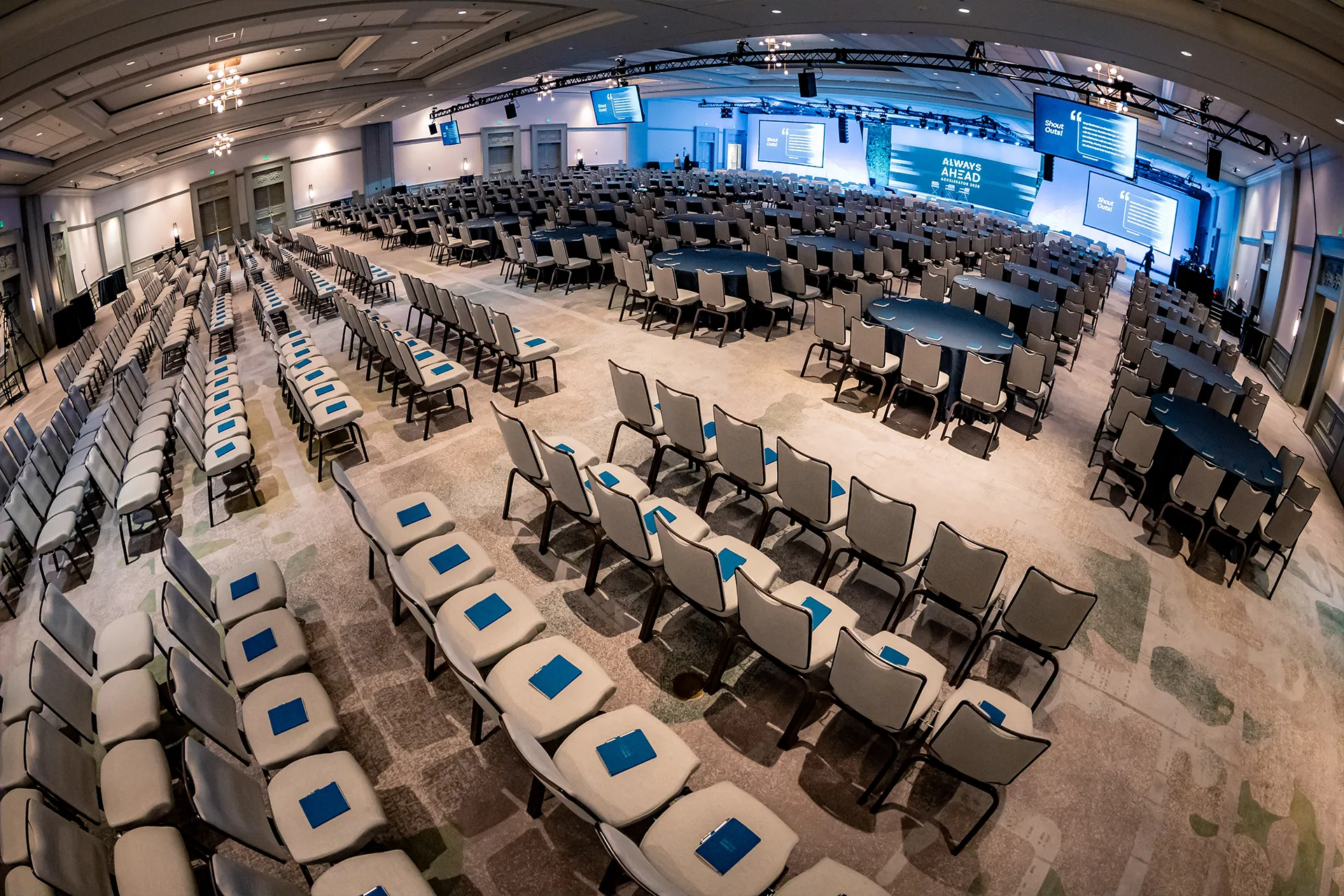
Rehearsal gives you a chance to work through those things while the room is still empty, there’s time to adjust, and you can see what happens when you run it again.
Rehearsal Isn’t a Formality
A show can feel pretty far along before anyone steps on stage for rehearsal. The production design is set, the equipment is in place, and the team has spent plenty of time working through the details.
At that point, it would be easy to look around and think the work is done.
But having all the pieces in place isn’t quite the same as having everyone run the show together. Running it from beginning to end, with the people who will actually be there when it counts, is a different kind of preparation.
That’s why rehearsal deserves its place in the schedule. Not as one last box to check, but as part of the event planning itself.