Booking the venue is a big decision. So are the terms that come with it.
When dates, room blocks, catering, production, and contracts are all moving at once, the in-house AV agreement can feel like one more thing that needs a signature. But those terms can shape quite a bit of what happens next, especially if you already have an AV production company you know and want to bring into the event.
Venue production agreements can cover everything from equipment and labor to internet, power, rigging, outside vendor fees, and services that are required to stay in-house. Some of those terms may be firm. Others may have more flexibility than they appear to at first glance. The important thing is understanding what you’re agreeing to before you start building the production plan around it.
A good place to start is simply asking what is actually required. Does the in-house provider need to handle the entire production, or are there specific services that need to remain with them? Can your production partner provide the audio, video, lighting, or staging? Are there labor minimums or outside vendor fees? Who handles rigging, power, and internet?

Every venue works a little differently, so there isn’t one answer that applies everywhere. And the goal isn’t to challenge every line of the agreement. It’s to understand the boundaries early enough that you can make good decisions about the event.
Those details matter because production terms don’t just determine where the equipment comes from. They can affect the budget, crew, load-in schedule, room design, rehearsal time, and ultimately how the production comes together. A requirement that seems relatively minor during contracting can become much harder to work around once the schedule is set and the room has been designed.
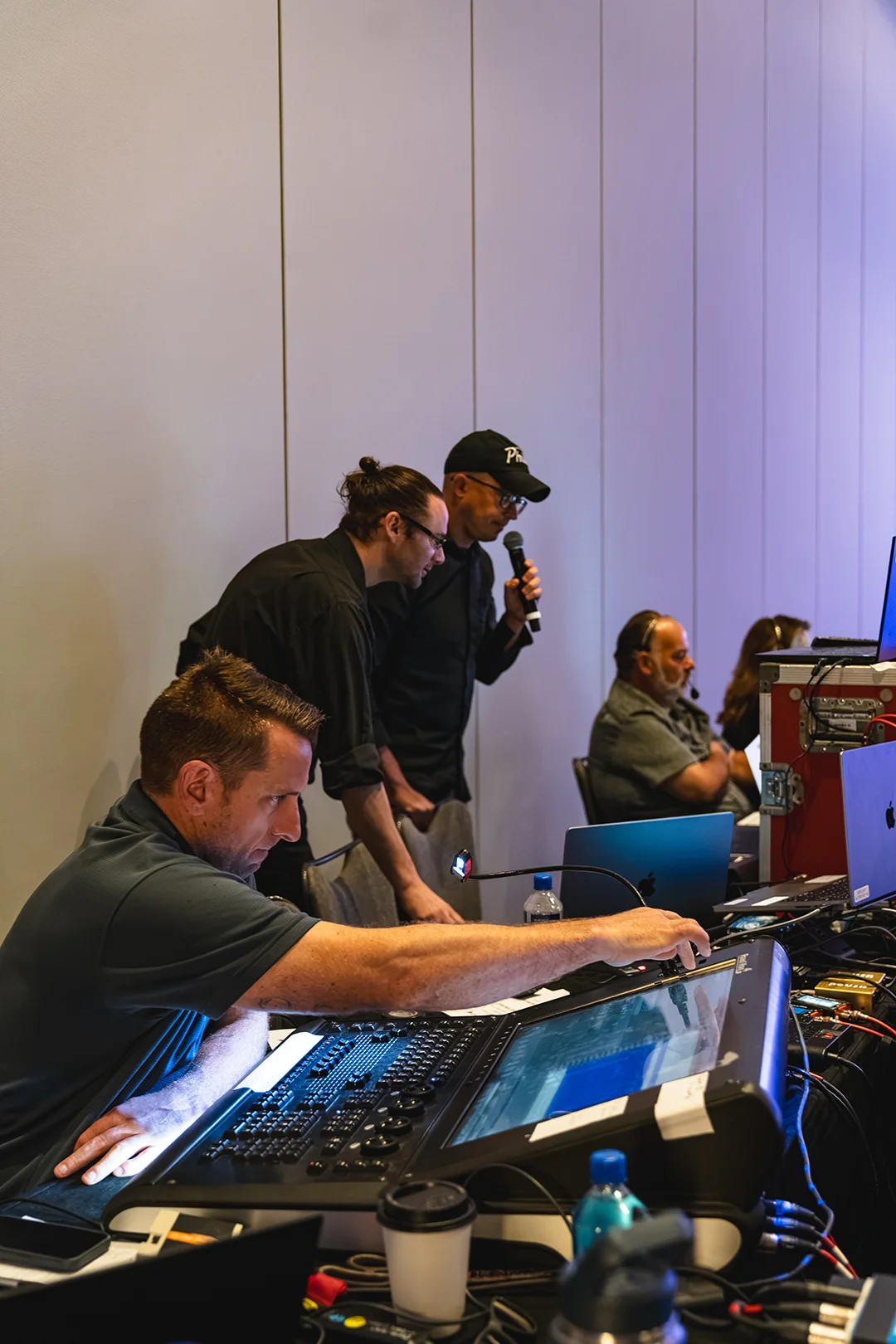
If you already have an AV production company you trust, this is one of the reasons it’s worth bringing them into the conversation early. A production team can look at the agreement through a different lens and identify things that may not stand out when AV is only one piece of a much larger venue contract. They can also help you decide what makes sense to use in-house and where bringing in your own team may give the event more continuity.
That conversation shouldn’t have to become a battle between the venue, the in-house provider, and an outside production company. Everyone brings something useful to the table. The venue knows the building. The in-house team knows its systems and requirements. Your production partner knows the event you’re trying to create and the people responsible for making it happen. Getting those perspectives together early usually makes the planning easier for everyone.
It also gives you more room to ask better questions before decisions become difficult or expensive to change.
Sometimes the in-house production team will be exactly what the event needs. Sometimes bringing in an outside AV production company will make more sense. Plenty of events use some combination of both. What’s important is that you arrive at that decision intentionally rather than discovering halfway through planning that the contract made the decision for you.
At Showorks, we work in venues throughout Philadelphia and across the country, each with its own rules, infrastructure, preferred partners, and ways of operating. When we’re involved early, we can help clients understand how those requirements affect the production, work through the questions with the venue, and build a plan that respects the building without losing sight of what the event actually needs.
By the time the agreement is signed and production planning is underway, there should be clarity around who owns what, what the venue requires, and how everyone will work together.
That’s a much better place to start building a show.